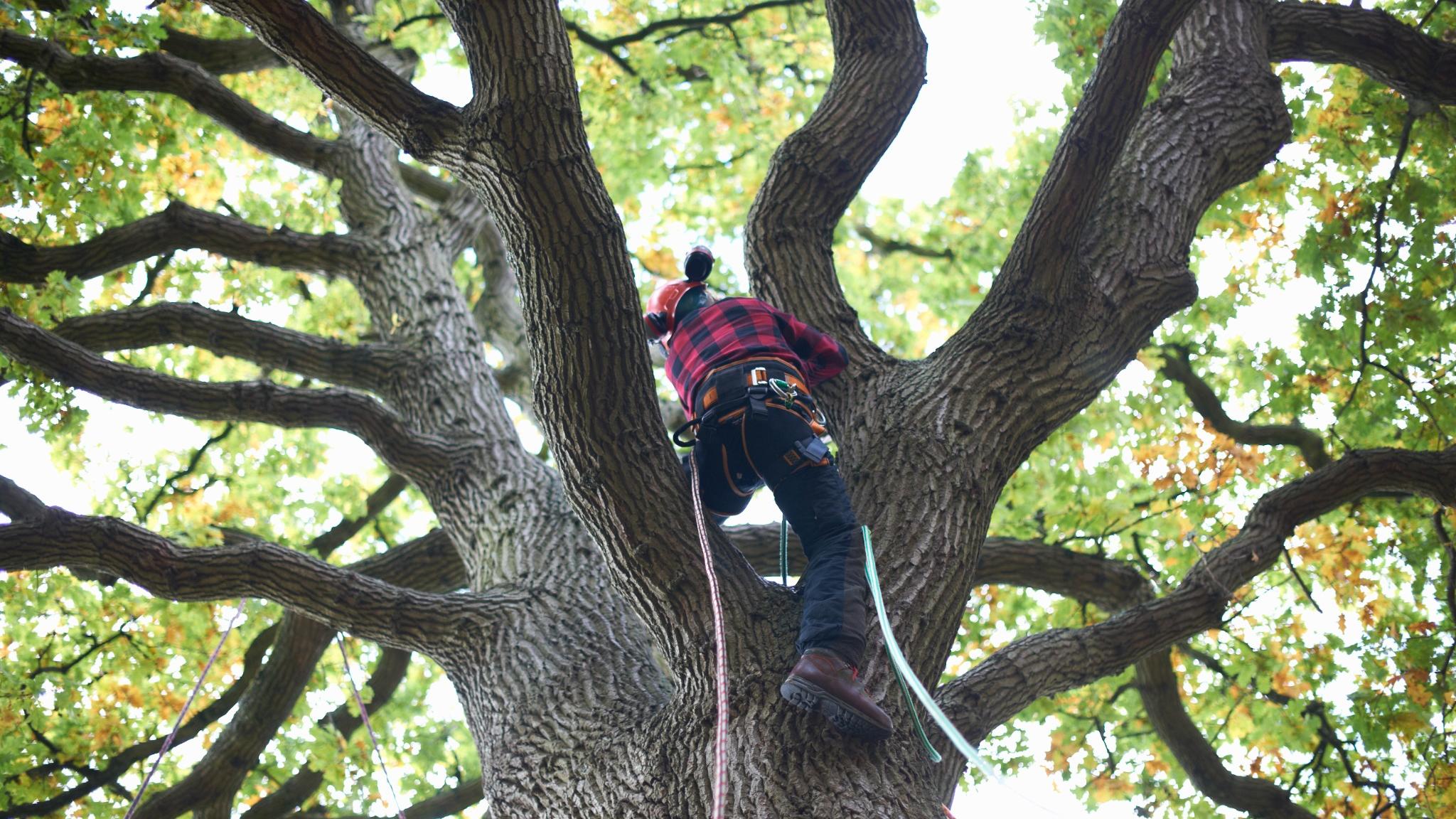
A job with responsibility: A look behind the scenes of tree inspection
At this year's German Tree Care Days, we had the opportunity to meet many dedicated and inspiring tree inspectors. Their stories, expertise, and passion for trees deeply impressed us and motivated us to write this article. The versatility, sophistication, and importance of this profession are often underestimated.
Trees as an essential part of our cities
Trees are much more than just green scenery—they provide habitat, shade, protect the climate, and are an indispensable part of urban infrastructure. To ensure that they remain safe and healthy in the long term, we need a profession that is often overlooked by the public: tree inspectors.
What do tree inspectors actually do?
Tree inspectors are responsible for regularly checking the safety of trees in public spaces. They assess the condition of the trees by means of visual inspections and document any damage, signs of disease, or potential hazards. The aim is to identify risks such as broken branches or falling trees at an early stage and to recommend appropriate measures.
Why is tree inspection so important?
Trees are under a lot of stress, especially in cities: drought, soil compaction, pollution, or mechanical damage from construction work can threaten their stability and vitality. Undetected damage can have fatal consequences—for people, vehicles, and buildings. Legal responsibility lies with the tree owners, usually municipalities, who fulfill their duty to ensure public safety by inspecting trees.
A day in the life of a tree inspector
The daily work routine is extremely varied: in the morning, the plan often includes visiting the trees to be inspected. On site, they are visually inspected for signs such as cracks, rot, fungal infestation, or dead wood. Depending on the findings, further investigations are carried out or specialist tree care companies are called in and, in an emergency, the trees are felled. Wind, weather, and terrain conditions make the job both physically demanding and varied.
What training do you need?
Certifications according to FLL guidelines or as a European Tree Technician (ETT) are essential. Many tree inspectors have their roots in tree care, gardening, landscaping, or forestry. However, career changers with an affinity for nature and an interest in technology can also enter this profession through appropriate further training.
Technology in use: digitally supported, not replaced
Modern tools such as tablets, GPS mapping, and digital tree registries facilitate documentation and tracking. The growing use of tree sensors is particularly exciting—this is where our Treesense sensors come into play.
How digital tree sensors are changing the profession
Treesense sensors continuously measure the water content in the trunk, providing objective data on the physiological condition of trees. For tree inspectors, this means having a sound basis for making decisions, e.g., whether a tree is suffering from drought stress and needs to be watered, or whether further investigation is required. In this way, sensor technology optimally complements human expertise and makes monitoring more precise and resource-efficient.
How does the job feel?
Tree inspectors report feeling a deep connection to nature. The job requires a sense of responsibility, specialist knowledge, and sometimes quick decision-making. At the same time, it offers a high degree of independence and the certainty of actively contributing to the safety and preservation of our urban green spaces.
A career with a future
In light of increasingly extreme weather conditions, dense development, and growing awareness of urban greenery, tree inspection is becoming increasingly important. Digital tools and advanced training opportunities are making the profession both more efficient and more attractive—especially for people who want to combine technology and nature.
