Heat, Drought, Fires: The Toll of the Summer of 2026
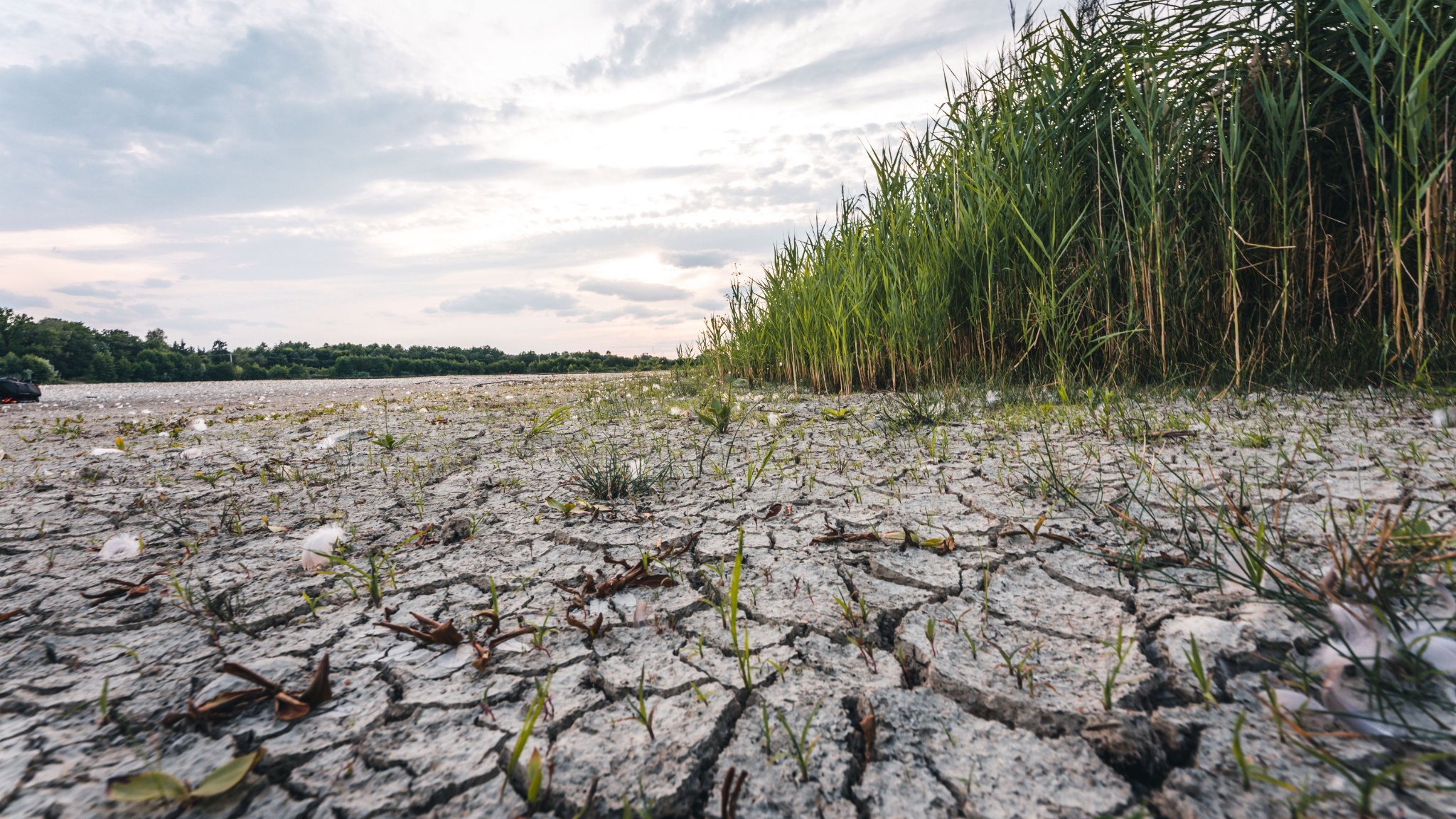
41.8 degrees in Saxony-Anhalt, wildfires stretching from Spain to Belgium, and soil that has dried out deep underground: The summer of 2026 has left its mark. With the benefit of hindsight, data from weather services, research institutes, and the EU show just how extraordinary it was—and why its consequences for trees are far from over.
A Summer of Records
On June 27, the thermometer in Möckern-Drewitz (Saxony-Anhalt) read 41.8 °C. It has never been this hot in Germany since records began, so the previous record of 41.2 °C from July 2019 is now history.
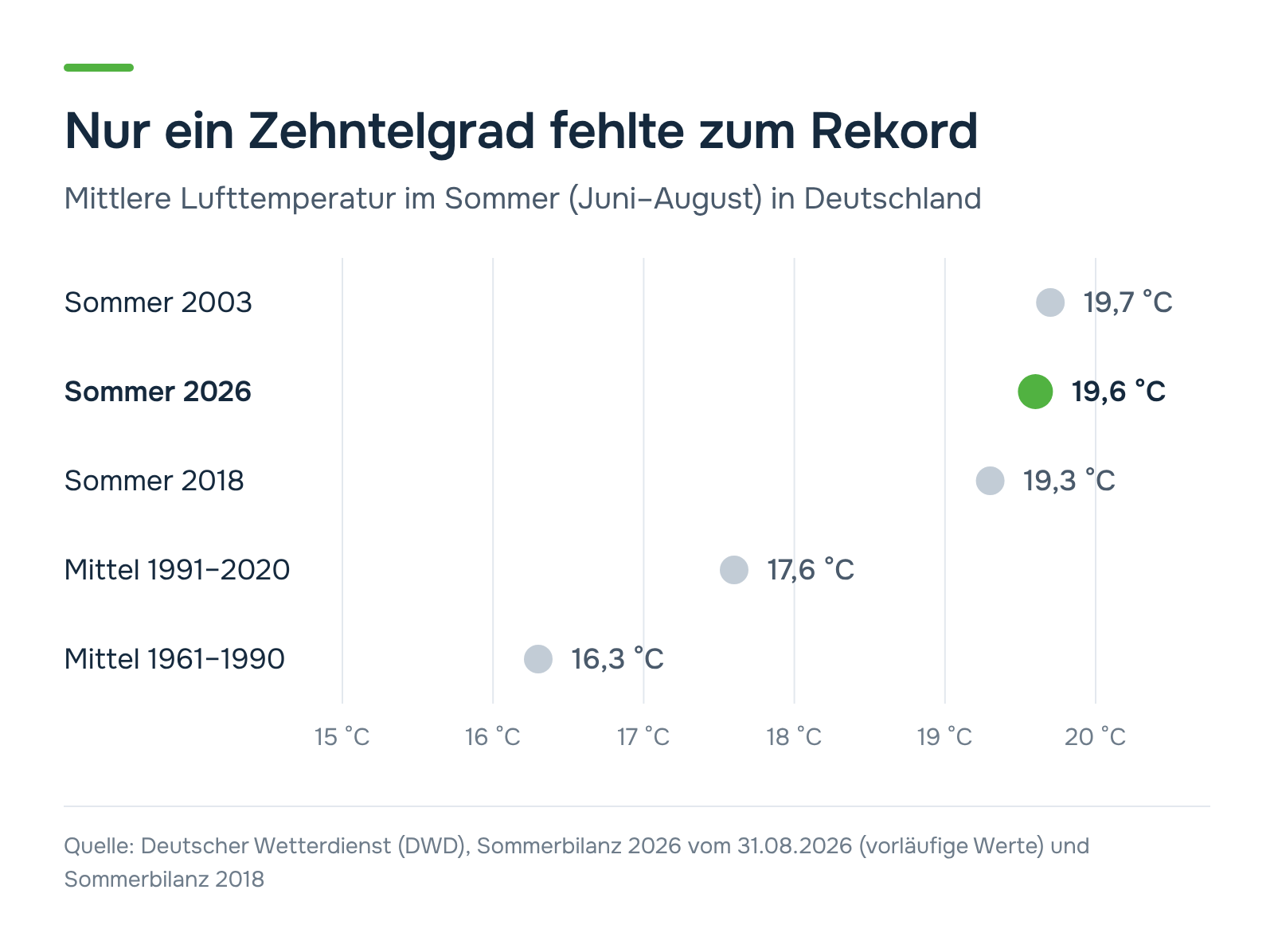
According to the German Weather Service (DWD), the average temperature for the entire summer was 19.6 °C. That is 3.3 degrees higher than the average for the years 1961 through 1990. Only the “summer of the century” in 2003 was a touch warmer, at 19.7 °C
.
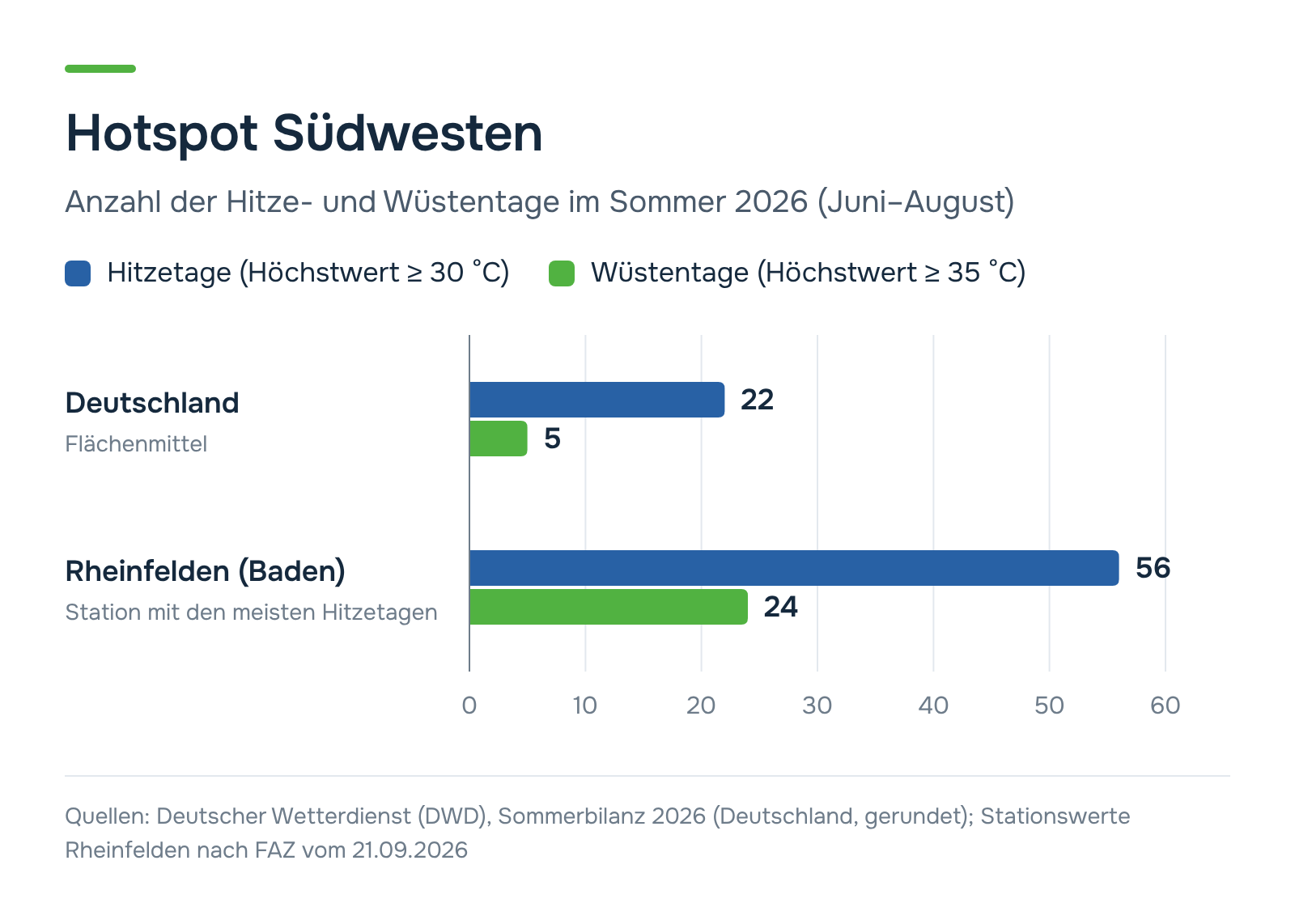
What was particularly unusual was how long the heat lasted. On a national average, the DWD recorded about 22 heat days with temperatures of at least 30 °C and about 5 desert days with temperatures of at least 35 °C—more heat days than ever before. The hotspot was in the southwest: Saarland, Baden-Württemberg, Rhineland-Palatinate, and Hesse experienced their hottest summer on record.
The Rheinfelden weather station on the border with Switzerland took the top spot. It was hot there on 56 days—nearly two-thirds of the summer—with temperatures reaching 35 °C or higher on 24 of those days.
Europe in Flames
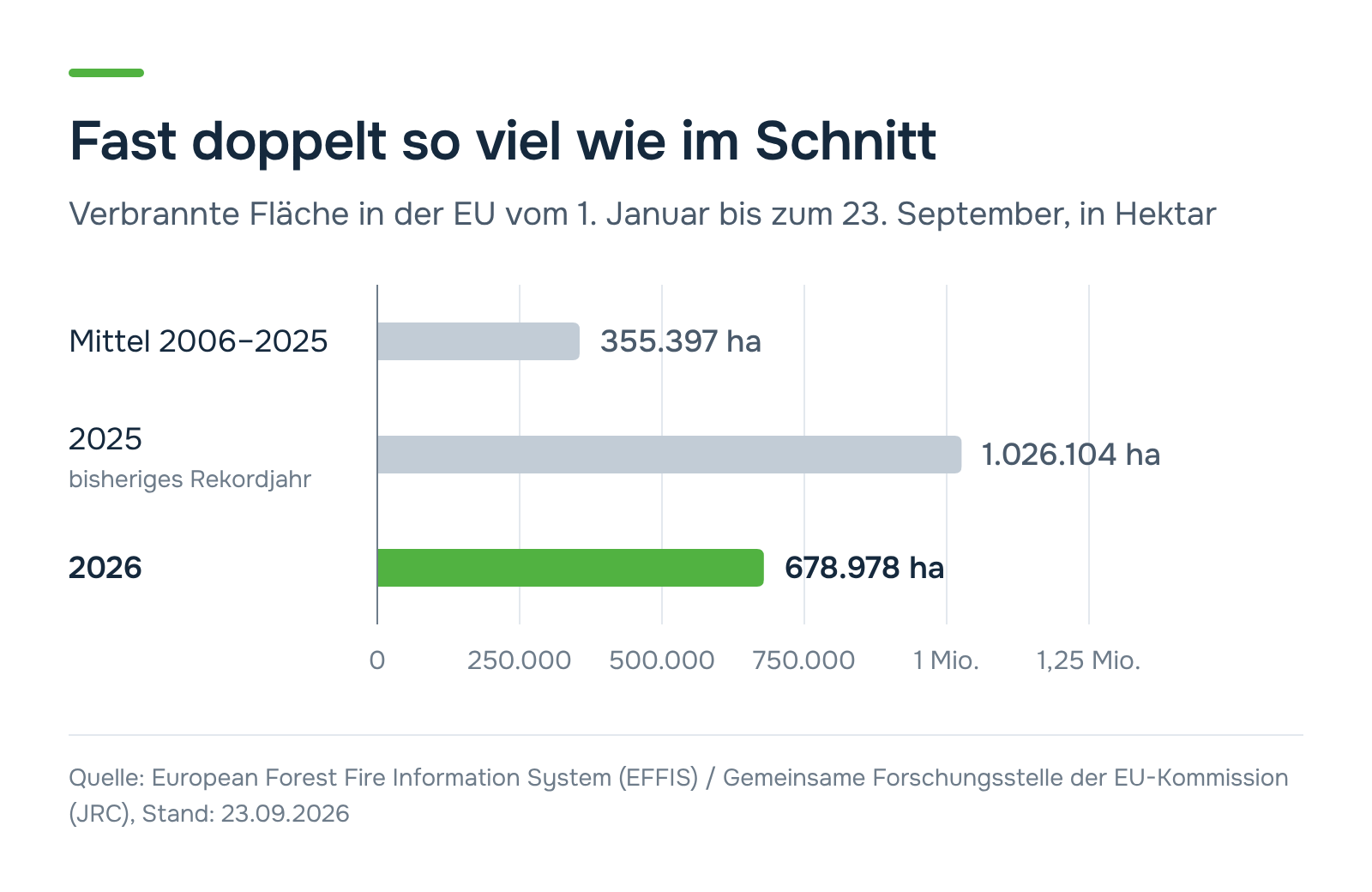
As of September 23, nearly 679,000 hectares had burned in the EU—almost twice as much as the average for the past 20 years as of that date. This is according to data from the European Forest Fire Information System (EFFIS). Only the record year of 2025 exceeded that figure, with over one million hectares burned.
Spain was hit the hardest, with about 311,000 hectares burned—more than the area of the Saarland. France experienced its worst year for wildfires, with over 107,000 hectares burned; in the major fire in the Gironde alone, more than 220,000 people were forced to flee their homes.
Fires also raged further north. The fire in the High Fens, a moorland area just a few kilometers from the German border, is considered the largest wildfire in Belgian history, covering about 3,000 hectares. In Germany, EFFIS recorded about 6,000 hectares by early August—nearly twice the long-term average. In the Hürtgenwald in the Eifel region, what is believed to be North Rhine-Westphalia’s largest forest fire in decades raged.
Experts refer to “fire weather”: where heat, dryness, and wind converge, parched vegetation ignites easily and flames spread rapidly. In Europe, however, the spark is usually provided by humans—whether through carelessness or on purpose.
And the trend is on the rise. According to a study by the Potsdam Institute for Climate Impact Research (PIK) and the Senckenberg Society, the annual area burned in Europe could increase by 39 percent (low emissions) to 192 percent (high emissions) by the end of the century. Prevention, early detection, and firefighting also play a key role in determining how much of this area actually burns.
Thirst Beneath the Surface
With about 171 liters per square meter, summer rainfall amounted to only 72 percent of the usual amount; in the northern Upper Rhine region, it was as low as about 70 liters. Germany was split in two: Only the northeast received significant rainfall, while Saarland, Rhineland-Palatinate, southern Hesse, Baden-Württemberg, and Bavaria suffered particularly from water shortages.
The key is to look beneath the surface. The top 25 centimeters of soil recovers quickly after a few days of rain—following the August rainfall, meadows and pastures turned green again in many places. In the deeper layers—down to about 1.8 meters, which the Drought Monitor of the Helmholtz Centre for Environmental Research (UFZ) tracks as total soil moisture—the situation is different. This is precisely where trees draw their water, and it is from there that groundwater is replenished.
In the south and east, these layers continue to lack moisture, as significantly less rain than normal has fallen there since the fall of 2025. Groundwater levels continued to drop; the Rhine and Danube were at low water levels, and ships were stranded. According to UFZ drought expert Andreas Marx, what’s needed now isn’t years of rainfall, but above all a winter with normal precipitation to ensure that 2027 doesn’t become another year of drought for trees, rivers, and groundwater. This cannot be predicted.
Sources
• German Weather Service: Weather in Germany in the Summer of 2026, August 31, 2026 (Summary on the German Climate Portal)
• German Weather Service: Weather in Germany in the Summer of 2018, August 30, 2018
• cleanthinking.de: Heat Wave of 2026: DWD Report with a Record High of 41.8 Degrees
• hessenschau: Hesse Experiences the Hottest Summer in Its History
• wetterprognose-wettervorhersage.de: Summer 2026 Sets New Records (Heat and Desert Days in Rheinfelden)
• FAZ: Drought, Heat, Fires: A Memorable Recap of the Summer of 2026, September 21, 2026
• European Commission’s Joint Research Center (JRC) / EFFIS: Current wildfire situation in Europe, as of September 23, 2026
• taz: Wildfires in Europe: Dry Fuel for the Fire (EFFIS data for Spain, France, Belgium)
• Carbon Brief: Fact Check: No, Europe Is Not Having Its “Quietest” Year for Wildfires (Evacuations in Gironde)
• Euronews: Wildfires in Europe: Is 2026 Already the Worst Year on Record? (EFFIS data for Germany)
• ms-aktuell: Hohes Venn: 3,000 hectares burned, August 19, 2026
• Ministry of Agriculture and Consumer Protection of North Rhine-Westphalia: Acute wildfire situation in the Hürtgenwald
• Potsdam Institute for Climate Impact Research: Area affected by wildfires in Europe could almost triple due to climate change, August 20, 2026
• Helmholtz Center for Environmental Research: Drought Monitor Germany
• weather.com: Drought has reached deep soil layers, July 13, 2026
• Robert Koch Institute: Weekly report on heat-related mortality, as of September 24, 2026