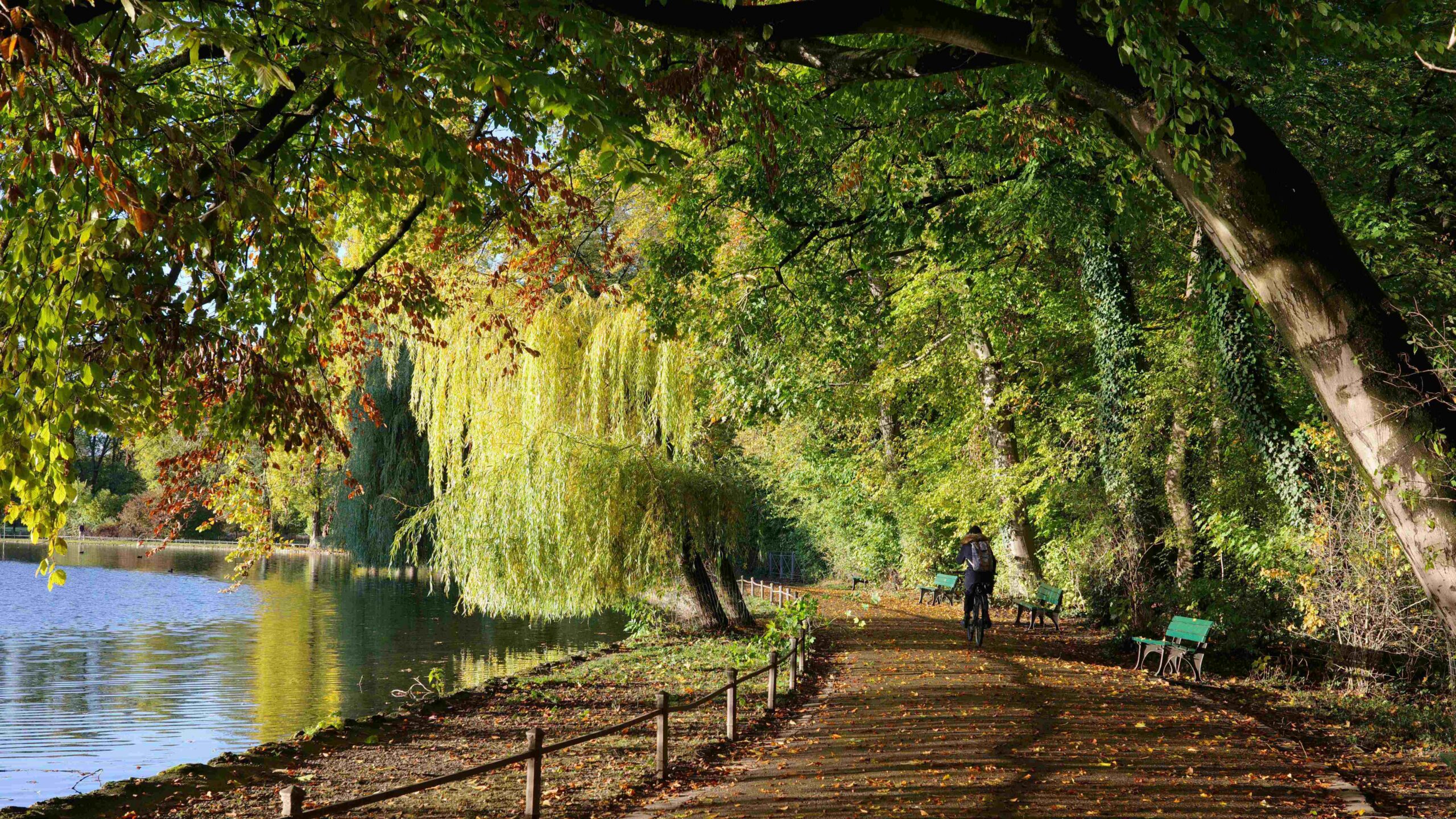
Urban green spaces recover faster than rural green spaces
Plants in cities recover more quickly from periods of stress than plants in rural areas. This is shown by a new study based on data from 751 cities worldwide, as reported, among others, by *Die Zeit* in its article “Trees Like It Urban.” According to the researchers, the most important reason is the water supply. However, this does not mean “simply watering more,” but rather watering in a targeted manner and as needed.
22 Years of Satellite Data from 751 Cities
A team from the University of Hong Kong analyzed satellite images from 2001 to 2022 of 751 cities in 109 countries. Each of these cities covers an area larger than 100 km². The satellite images show how green an area is. During periods of drought or heat, plants lose their green color, and when conditions improve, the green returns. Based on these fluctuations, the researchers calculated how quickly the vegetation recovers. They first accounted for the effects of seasonal variations in temperature, precipitation, and solar radiation.
Only areas that remained green throughout the entire period were included in the analysis. Areas that were developed or paved over the years were excluded, as were areas with more than 20% arable land. Otherwise, construction work or harvests would have been interpreted as stress and recovery.
Three zones were compared: the city center (as of 1990), the urban areas that were added by 2018, and a ring approximately 15 km wide in the surrounding area.
Urban green spaces recover more quickly, and the gap is widening
In most cities, green areas recovered more quickly after periods of stress than in the surrounding areas. Depending on the satellite dataset, this was true for 78% or 91% of the cities.
Urban green spaces recover about 0.09 months faster—that is, not quite three days. This figure refers to normal month-to-month fluctuations, not to recovery following a severe drought. In dry regions, the difference is significantly greater (more on this below).
Vegetation in the old city center recovers the fastest, followed by the newer urban areas. Green spaces in the surrounding countryside recover the slowest.
This difference has grown over the years in 67% of the cities. This is primarily because green spaces in the surrounding areas are recovering less and less effectively. Urban green spaces remained stable or even improved slightly.
The drier it is, the greater the lead
In arid regions, the difference between urban and rural areas is significantly greater than in humid regions. It was greatest at an annual average temperature of 25 °C and 100 to 500 mm of annual precipitation. For example, in Phoenix, which is located near the desert, the gap is much wider than in humid Atlanta.
In most cities, urban and suburban green spaces lost a similar amount of greenery when under stress. The difference lay in their recovery. In 32% of the cities—primarily in dry regions—there was an additional benefit: urban green spaces lost less greenery even under stress and still recovered more quickly afterward.
The most important factor: water
The researchers examined nine possible explanations, including the urban heat island effect, the CO₂ concentration in urban air, building density, and tree canopy height. They found the strongest correlation with irrigation.
However, there is no global data on how much water is used to irrigate parks and street trees. The team therefore used evapotranspiration as an indicator. This refers to the water that evaporates from the soil and is released by plants through their leaves. If urban green spaces release significantly more water than green spaces in the surrounding area, more water must be available to them. Especially in dry climates, this suggests the use of artificial irrigation.
This is an estimate, not a measurement, because shade, plant species, and heat also affect evaporation.
What this means for urban trees in our area
The study shows that urban greenery can be more resilient than nature outside in a warmer climate, provided it receives adequate water and care. Summers are becoming drier in Germany as well. The droughts since 2018 have shown how quickly urban trees reach their limits.
The researchers could only indirectly determine where the water was going. This can be measured directly on individual trees. TreeSense sensors monitor the moisture levels in the trunk and indicate whether a tree currently needs water or is still well-hydrated. This allows for watering only when necessary, rather than according to a rigid schedule. This saves water and labor, and the trees receive water when it benefits them most.