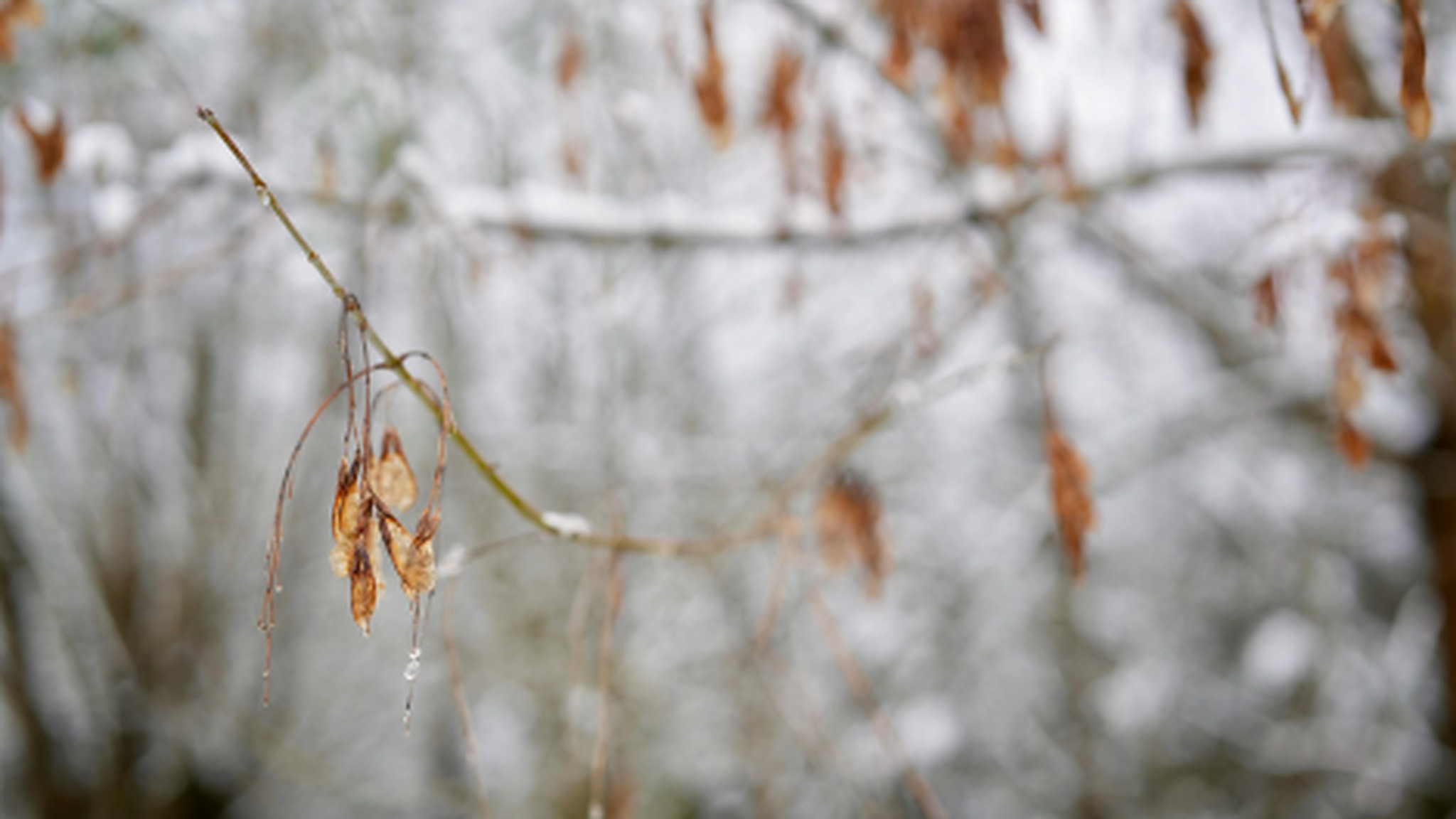
Dying of Thirst in Sub-Zero Temperatures: Frost Desiccation in Urban Trees
Trees can suffer from dehydration in winter, even when temperatures drop below freezing. Experts call this “frost drought”: On sunny, frosty days, the tree’s crown loses water, and the frozen ground cannot replenish it. This article explains how frost drought occurs, which trees are at risk, how to recognize the signs, and what can be done to help in winter.
What is frost drought?
Frost desiccation is not caused by freezing, but by a lack of water. If the sun shines on a cold day, needles and leaves begin to lose moisture through evaporation despite the low temperatures. If the ground is frozen, the roots cannot compensate for this loss, and the needles dry out.
Sun and wind increase evaporation. According to the Mecklenburg-Vorpommern Plant Protection Service, plants begin to lose water through evaporation even at temperatures around freezing. Combined with strong sunlight and wind, this can result in significant amounts of water loss.
Measurements by the Bavarian State Institute for Forestry and Forest Management show how much water evergreen trees release in winter. During the mild winter of 2008, soil water reserves beneath spruce trees at the forest climate stations in Ebersberg (Munich Gravel Plain) and Flossenbürg (Upper Palatinate Forest) declined significantly in January and February, particularly in the topsoil. Deciduous trees, on the other hand, consume almost no water during the dormant season.
Which trees are particularly at risk
Evergreens, young plantings, and trees in locations exposed to sun and wind are the most severely affected.
Evergreens: Conifers such as spruce, pine, fir, yew, and thuja, as well as evergreen broadleaf trees, need more water in winter than deciduous trees.
Young trees and newly planted trees: Younger trees are more susceptible than older ones. Newly planted trees still have a limited root system.
Sun- and wind-exposed locations: Areas with heavy sun exposure and open to the wind increase the risk, as do soils that enter winter dry after a fall with little precipitation. This applies to many urban trees along streets and in public squares.
How to Recognize Frost Drought
Typical symptoms include red or brown needles, usually on the sun-exposed side of the tree. The youngest, most sensitive needles are primarily affected. In cases of severe damage, entire branches, older needles, or even the entire crown may be affected.
The symptoms are easily misinterpreted. They resemble damage caused by freezing. Often, the damage does not become apparent until the following year: Needle drop begins inside the plant. It is often the cause of summer needle shedding, for which no pathogen can then be identified.
There is a second obvious source of confusion when it comes to roadside trees. Road salt also turns the needles reddish-brown, typically on the side facing the road.
The good news: Buds are generally better protected than needles. As a result, the symptoms often seem more serious than they actually are. A related damage pattern provides an example: Following severe frost-thaw damage in the winter of 1986–87, the WSL monitored damaged conifers in the canton of Schwyz. Less than 5% died. A prerequisite for recovery is that no additional stress—such as bark beetle infestation—occurs.
This does not apply to all species. In young Douglas firs in particular, crown dieback caused by frost desiccation is irreversible and often fatal.
What Helps in Winter
The most important precaution is to make sure the water reservoir is full before the ground freezes.
Water thoroughly in the fall. The Bavarian State Institute for Viticulture and Horticulture recommends about 30 to 40 liters per square meter of planting area for evergreens, ideally in mid-October. This is especially important after a dry fall.
Water again on frost-free days. Water regularly as long as the weather remains frost-free. During prolonged frost-free, dry periods, check soil moisture and water as needed.
Mulch around the tree base. Mulch made from bark or shredded leaves reduces evaporation from the soil, and the soil freezes more slowly. A layer of bark mulch about 8 cm thick will last several years.
Provide shade for young or sensitive trees and shrubs. Straw mats, shade cloth, or brushwood protect against the winter sun and wind. Plastic sheeting is not suitable because it acts like a small greenhouse in the sun and increases evaporation.
Measure, Don't Guess
You can't tell from the outside whether a tree is well-nourished as it heads into winter. The TreeSense Pulse measures the tree's water status directly inside the trunk. This allows you to plan fall watering based on need rather than the calendar, before the ground freezes.
Good to know: The TreeSense Pulse does not provide reliable readings at temperatures below 0 °C. In this case, the TreeSense Cloud displays “Frost” as the tree status.
Sources
Bavarian State Institute for Forestry and Forest Management: Grimmeisen, W.; Raspe, S. (2008): A mild winter does not dry out forest soils. LWF aktuell 64. PDF
Bavarian State Institute for Viticulture and Horticulture (2014): The Garden in Fall – Caring for Perennials and Woody Plants. Fact Sheet 4153. PDF
Swiss Federal Institute for Forest, Snow and Landscape Research (WSL), Swiss Forest Protection: Online Diagnosis – Frost. PDF
State Office for Agriculture, Food Safety, and Fisheries of Mecklenburg-Western Pomerania, Plant Protection Service: Fact Sheet on Winter Drought Damage. PDF
Saxon State Office for the Environment, Agriculture, and Geology: Kroll, U. (2009): Non-parasitic Damage to Conifers. PDF
waldwissen.net / WSL (2007): Frost Damage to Conifers and Its Consequences. Online
waldwissen.net (2022): Physiological Needle Reddening in Douglas Fir: Frost Desiccation. Online